Cellar Vs Basement : Definition of Cellar and Basement

This post was originally published on this site
In this article, we will discuss Cellar Vs Basement.
1. Cellar
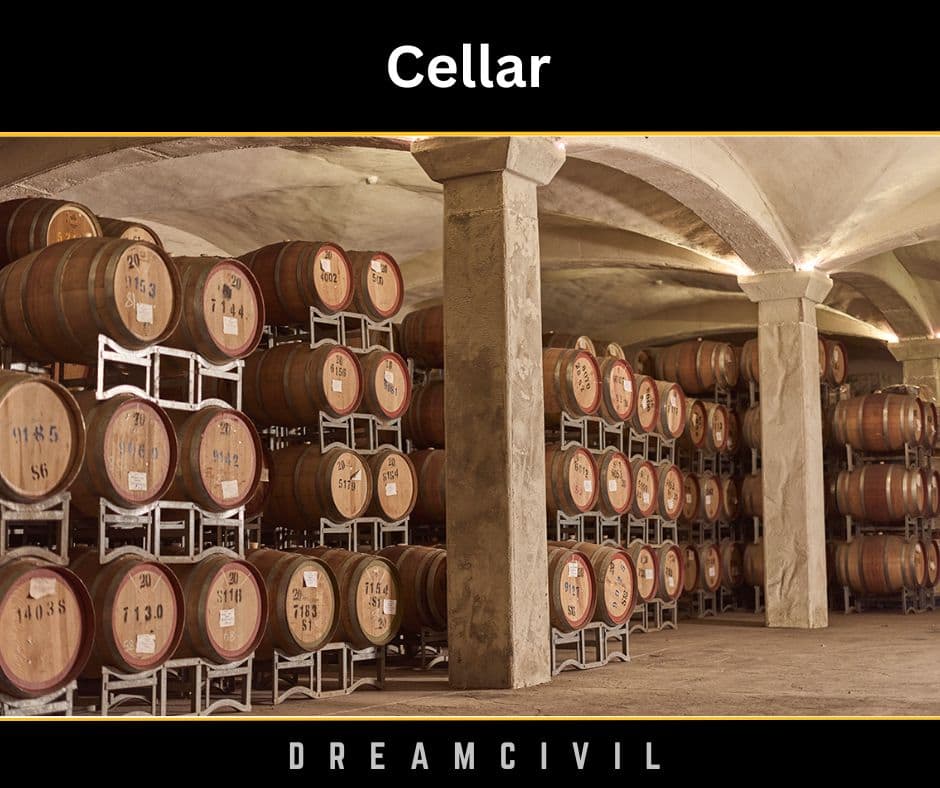
A cellar is a portion of a building that is attending entirely below the level of the curb. The cellar is employed chiefly as a storage location, as it is fully underground.
The most used type of cellar is the wine cellar. It is the most famous choice for keeping food and other drinks, as it is out of direct sunlight and will be in a cool, dry place.
A cellar is a little room where the temperature can be efficiently handled. It is usually accessed through a trap door and a ladder.
The cellar is usually fitted with lights, but it is typically not decorated with individual comforts because it is too small to be employed as a spare room for individuals and to rent someone to stay there.
2. Basement
A basement is an underground floor within the house beneath the curb level. The basement is believed to be another room in the building or a guest room.
The basement is majorly employed to keep things like a club or a game room. Some choose to deliver the basement like any other room to employ it much more than store things but as a private or extra room.
It is feasible to rent a basement with a room of appropriate size for someone to stay there.
The basement is mostly typical in locations where the climate is temperate, allowing the house to stay stable and warm during winter and snow.

Basements, mainly where lousy weather is specific, usually have outdoor entrances; some contain a stairway to go down or a stairway that majorly guides to the basement.
Basements in one and two-family homes can be lawfully colonized only if the following conditions are satisfied:
a. The room satisfies the needs of the Housing Maintenance Code for rooms not located in the cellar or basement, for example, minimum room size.
b. The lowest ceiling height must be 7 feet.
c. The walls, down to ground level, should be moisture and waterproof if the HPD decides that the subsoil requirements in the lot need this.
d. The basement is colonized only by family members or families who colonize the dwelling.
Basements in a single-family home can be legally rented only if the following conditions are met:
a. Keeping with the Housing Maintenance Code for the lowest room size.
b. The lowest ceiling height must be 7 feet.
c. The walls, down to ground level, should be moisture and waterproof if the HPD decides that the subsoil requirements in the lot need this.
d. A family colonizes the basement and does not contain borders.
e. Each room must own at least one window.
f. The bottom of any yard or other required open space should not be more significant than 15 cm below the window sill of any required window in the room. Basements in a two-family house cannot be leased legally.
3. Cellar Vs Basement
The difference between the cellar and basement are as follows:
| Feature | Cellar | Basement |
|---|---|---|
| Definition | An enclosed space below ground level is mainly employed for storage. | A story of a building partly below the curb level but with a minimum of one-half of its height above the curb level. |
| Location | Below the grade level. | It can be below or partially below the grade level. |
| Ceiling height | Usually lower than a basement. | It can be the same height as the first floor. |
| Ventilation | Usually owns poor ventilation. | It can have good ventilation. |
| Finish | Mostly unfinished. | It can be completed to be employed as a living space. |
| Use | Mainly employed for storage. | It can be employed for living space, storage, or other uses. |
This was for the Cellar Vs Basement.
4. References1. Content Filter & Authenticity Checking Team, Dream Civil International (Our team checks every content & detail to maintain quality.) |
Read Also: Approximate Estimate Required For

Responses